For small and mid-sized businesses, packaging is often treated as an afterthought — something to sort out once the product itself is ready. But in a market where customers form an opinion within seconds of receiving a package, custom boxes have quietly become one of the highest-leverage marketing tools a brand can own.
First Impressions Are Now Made at the Doorstep
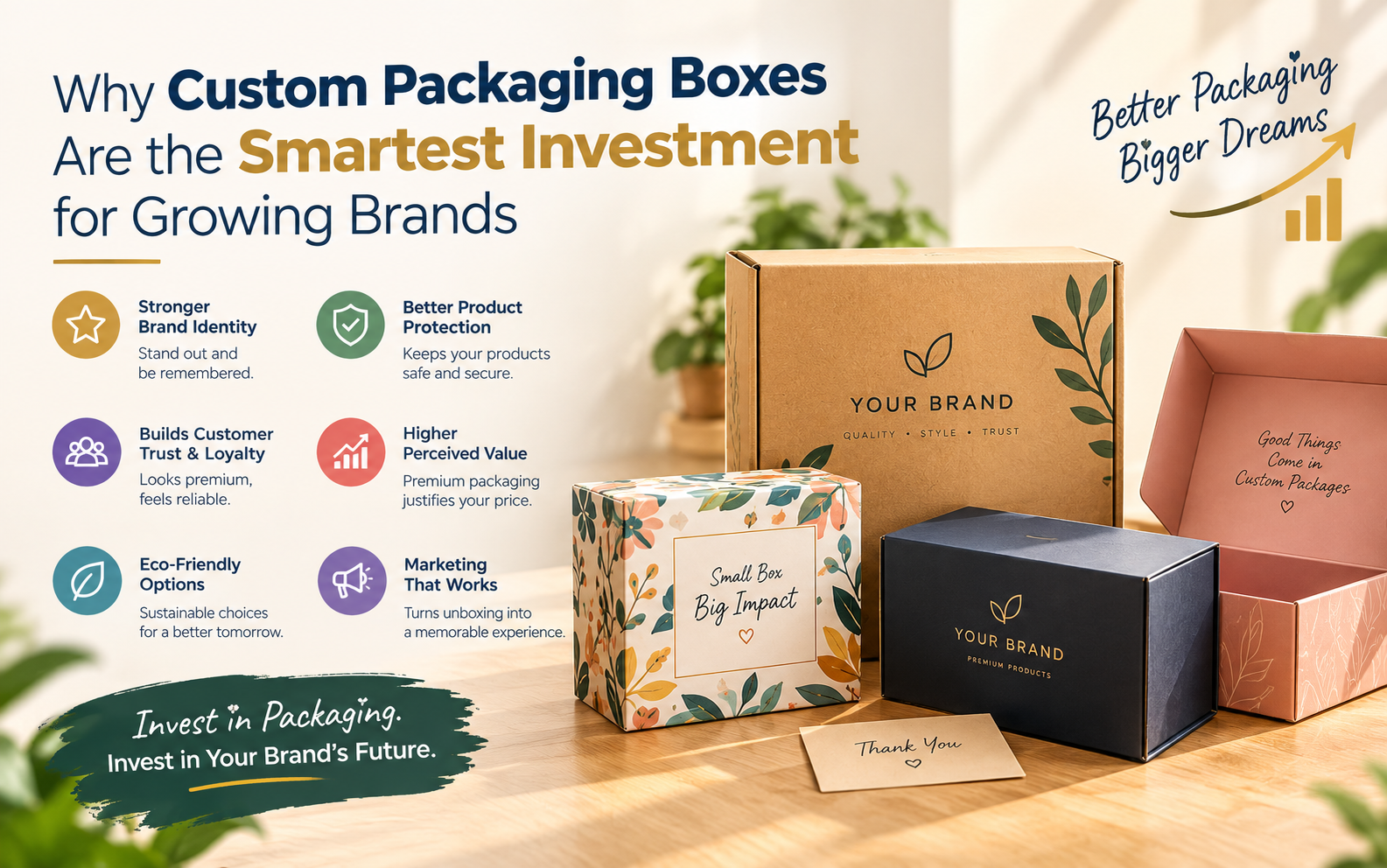
With the rise of e-commerce, the "unboxing moment" has replaced the in-store shelf as many customers' first real interaction with a brand. A generic brown box signals an afterthought. A custom-printed box with your logo, brand colors, and thoughtful finishing touches signals that the company behind it cares about quality — before the customer has even opened it.
This matters more than most businesses realize. Social media has turned unboxing into content: customers film themselves opening packages and share the experience with their followers. A well-designed box with a clean logo, a tissue-paper insert, or a small thank-you card can turn a routine delivery into free advertising. A flimsy or unbranded box, on the other hand, rarely gets a second look — and can even undercut trust in the product inside it.
Protection and Branding Don't Have to Be Separate Costs
One of the biggest misconceptions is that custom packaging is purely a marketing expense layered on top of "real" shipping costs. In practice, well-designed custom boxes are engineered around the product's exact dimensions and fragility needs, which often reduces damage-related returns and the extra padding materials businesses use to compensate for generic, ill-fitting boxes. The box does double duty: protecting the product and promoting the brand.
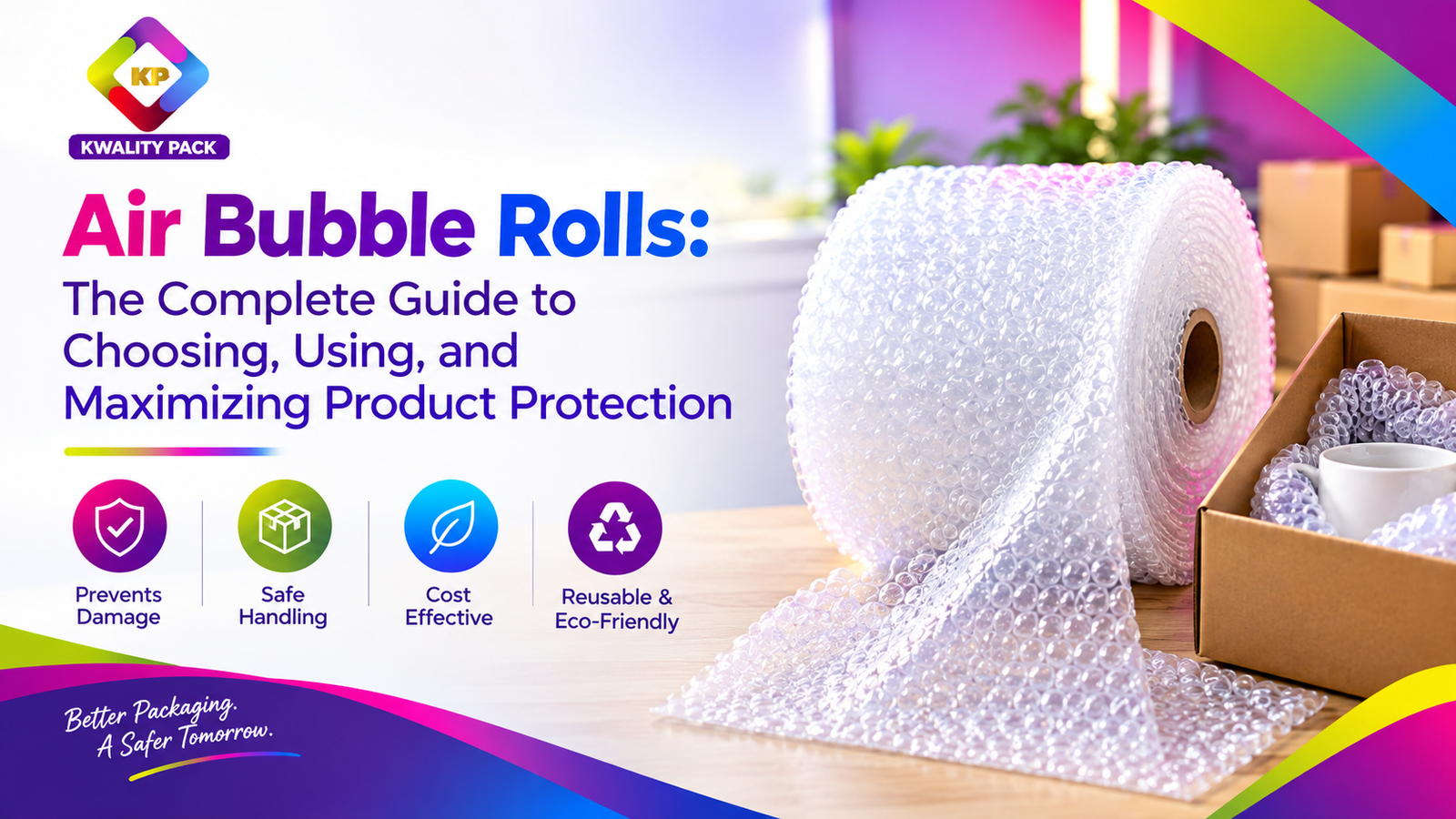
Consider a business shipping glass jars or cosmetics. A generic box requires excess bubble wrap, foam inserts, or packing peanuts to stop movement during transit — all added cost and added waste. A custom box built to the product's exact footprint often needs little to no extra filler, which can lower material costs per shipment even after accounting for the price of custom printing.
Material Choice Sends a Message
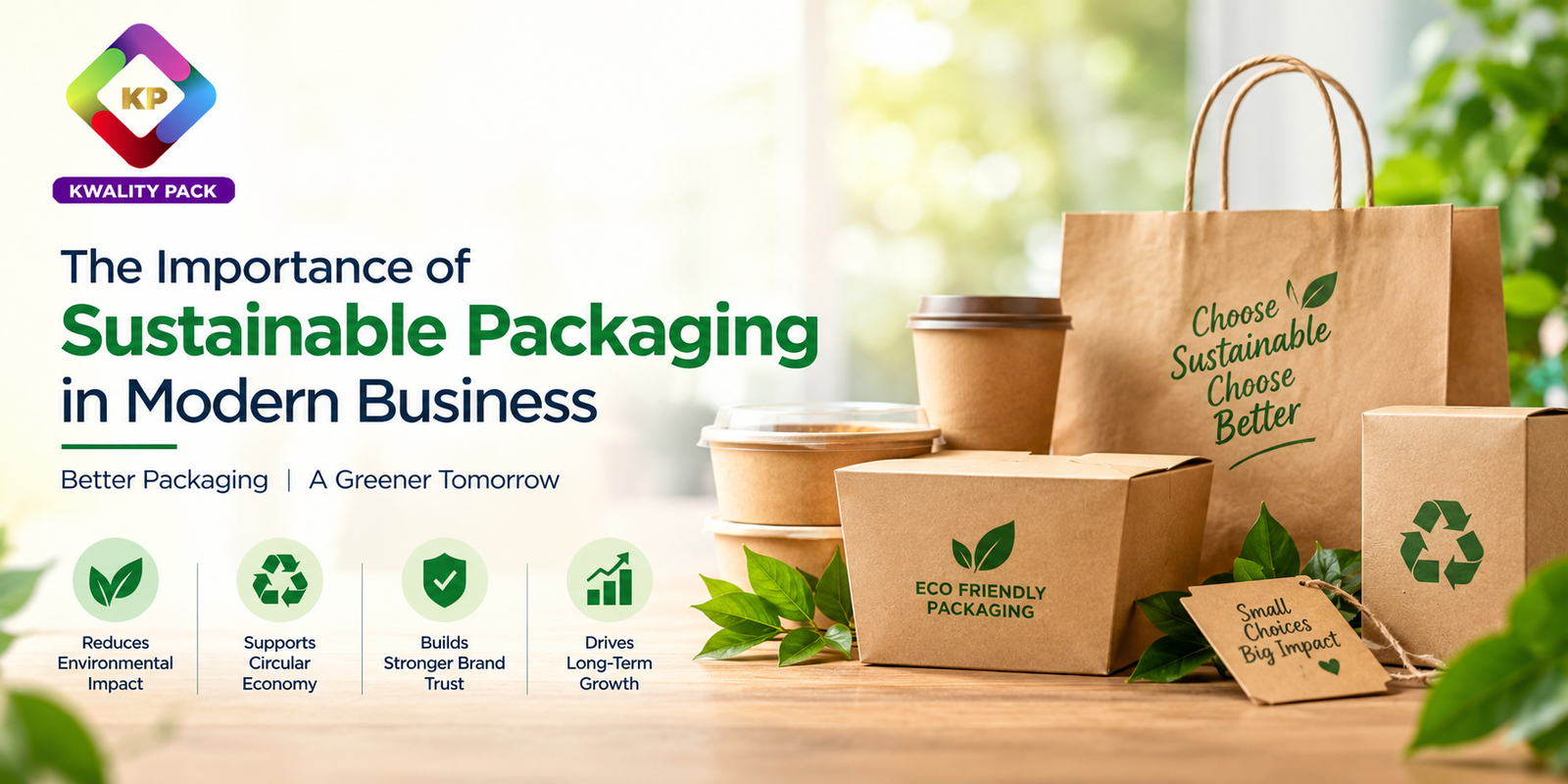
Kraft and corrugated materials have become especially popular — not just for their durability, but because they signal sustainability to increasingly eco-conscious buyers. Brands in cosmetics, food, CBD, and retail have leaned into recyclable and biodegradable packaging as both a values statement and a practical differentiator on crowded marketplace listings.
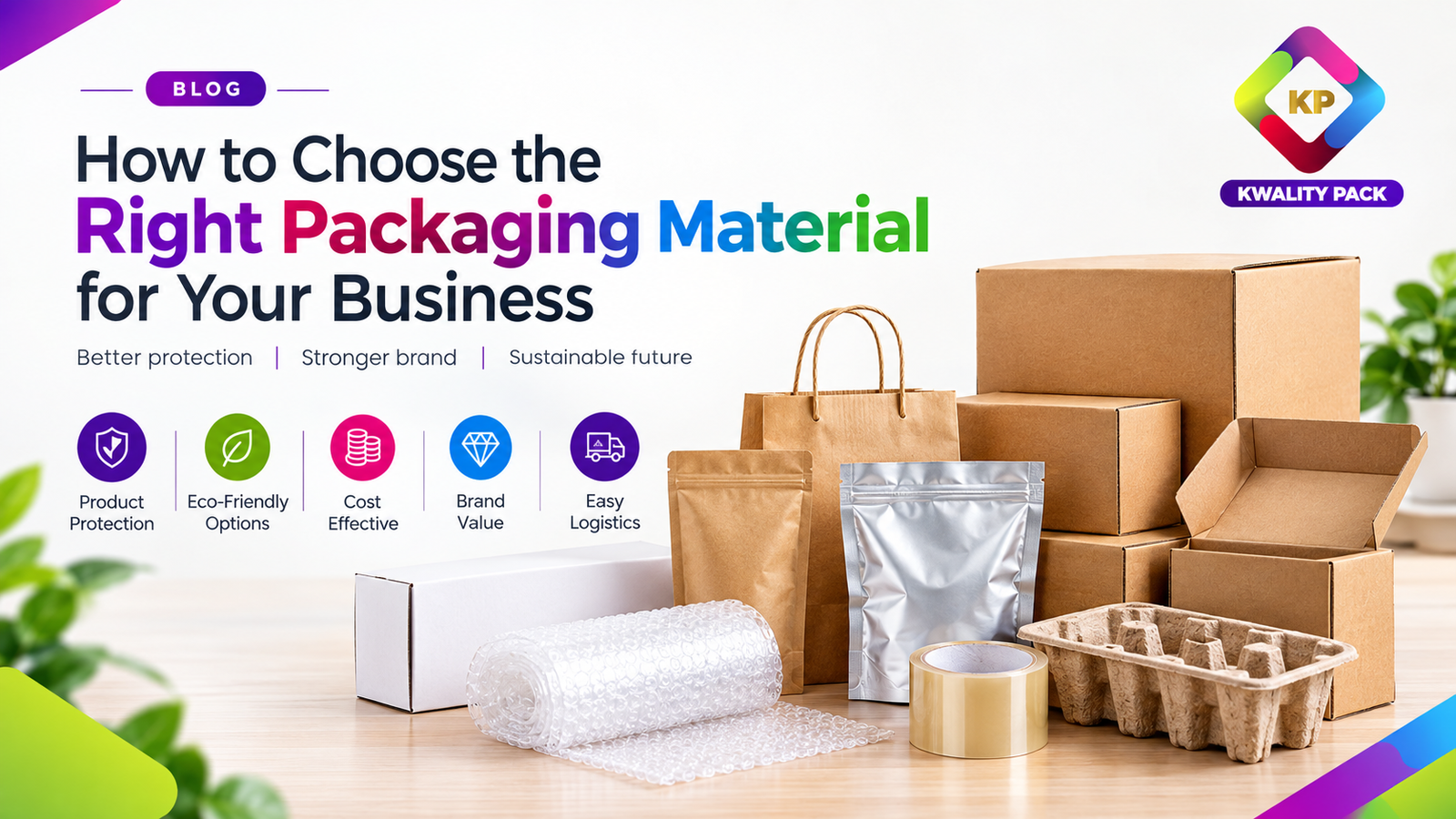
A few material options worth understanding:
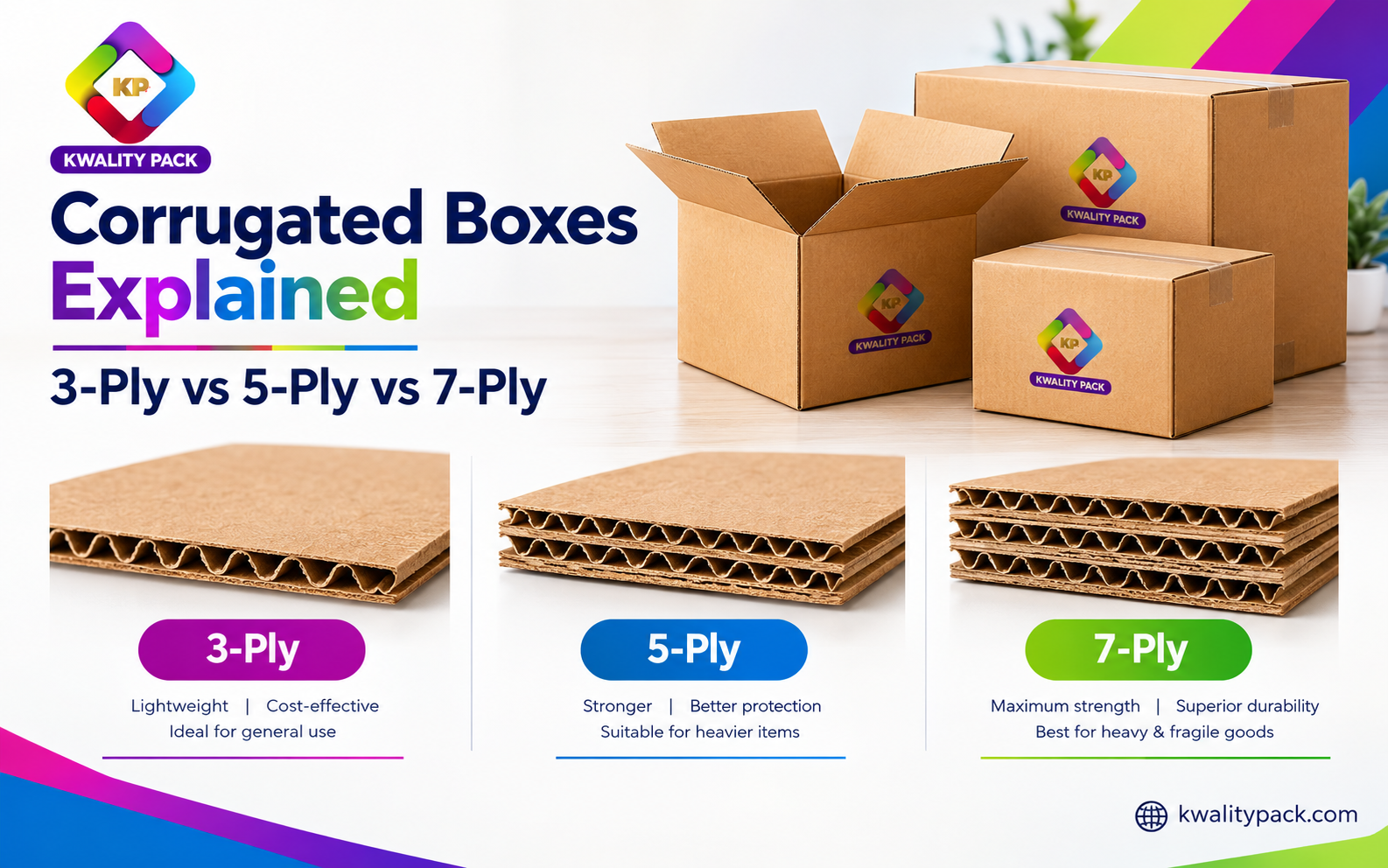
• Corrugated cardboard — best for shipping boxes and mailers that need to survive transit; strong, stackable, and cost-effective at volume.
• Kraft paper — the go-to for an eco-friendly, rustic aesthetic; popular with food, coffee, and skincare brands.
• Rigid boxes — thicker, sturdier stock used for premium or luxury products like electronics, jewelry, or gift sets; conveys higher perceived value.
• Mylar bags — ideal for products needing airtight, moisture-resistant, or light-blocking protection, such as food, herbs, or supplements.
• Corrugated mailers with matte or gloss lamination — a middle ground that adds a polished finish without the cost of rigid boxes.
Matching the material to the product category isn't just aesthetic — it directly affects shelf life, damage rates, and how "premium" the unboxing feels.
Custom Packaging Scales With Order Volume
A common concern for smaller businesses is that custom boxes only make financial sense at large volumes. In reality, most manufacturers now offer flexible order quantities, meaning a startup can order a few hundred units to test a design before committing to bulk pricing. This lowers the barrier for brands that want a professional look without a five-figure minimum order.
It's also worth understanding how pricing typically scales:
1. Small test batches (a few hundred units) — higher per-unit cost, but low risk for validating a design or a new product line.
2. Mid-size orders (1,000–5,000 units) — the sweet spot where per-unit cost drops meaningfully while still being manageable for inventory storage.
3. Bulk orders (10,000+ units) — lowest per-unit cost, best suited for established products with predictable demand.
Businesses that plan ahead — locking in designs early and forecasting demand — tend to get the most value out of bulk pricing tiers without overcommitting to inventory they can't move.
Design Choices That Actually Influence Buying Behavior
Beyond material and size, a handful of design decisions consistently affect how a package performs:
• Color psychology — muted earth tones tend to read as natural/organic, while bold colors and metallic foiling read as premium or high-energy.
• Typography hierarchy — the product name should be the most legible element from arm's length; secondary info (ingredients, usage) can be smaller.
• Structural features — magnetic closures, ribbon pulls, or window cutouts add a tactile, premium feel that flat printing alone can't replicate.
• Consistent branding across SKUs — using a repeatable template (same layout, varying only color or product name) keeps a product line recognizable on shelf or in a group order.
What to Look for When Choosing a Packaging Partner
• Design support included, not billed separately — mockups and revisions before you commit to printing
• Turnaround time that matches your shipping and inventory cycles
• Material options that fit your product category (rigid boxes for premium goods, mylar for freshness-sensitive items, kraft for eco-positioning)
• Transparent per-unit pricing at different order volumes, so you can plan for growth
• Sample or proof process before full production, to catch color or sizing issues early
• Reorder consistency — the ability to get the exact same print quality and color match on repeat orders, which matters once a design is finalized
Common Mistakes Businesses Make With Custom Packaging
• Designing for the box, not the shelf or doorstep — a design that looks great on a screen doesn't always translate once printed at full size.
• Skipping a physical sample — colors and textures can shift significantly between a digital proof and the final printed material.
• Underestimating lead times — custom printing and production takes longer than stock packaging, so ordering too close to a launch date or seasonal peak can cause delays.
• Ignoring how the box ships — a beautifully designed box that gets crushed in transit because it wasn't built for the shipping method defeats the purpose.