Choosing the wrong box costs more than it seems. A box that is too weak means damaged goods, refunds and unhappy customers. A box that is too strong means paying for material you don't need and higher shipping costs. The right choice comes down to understanding corrugated "ply."
What Does "Ply" Mean?
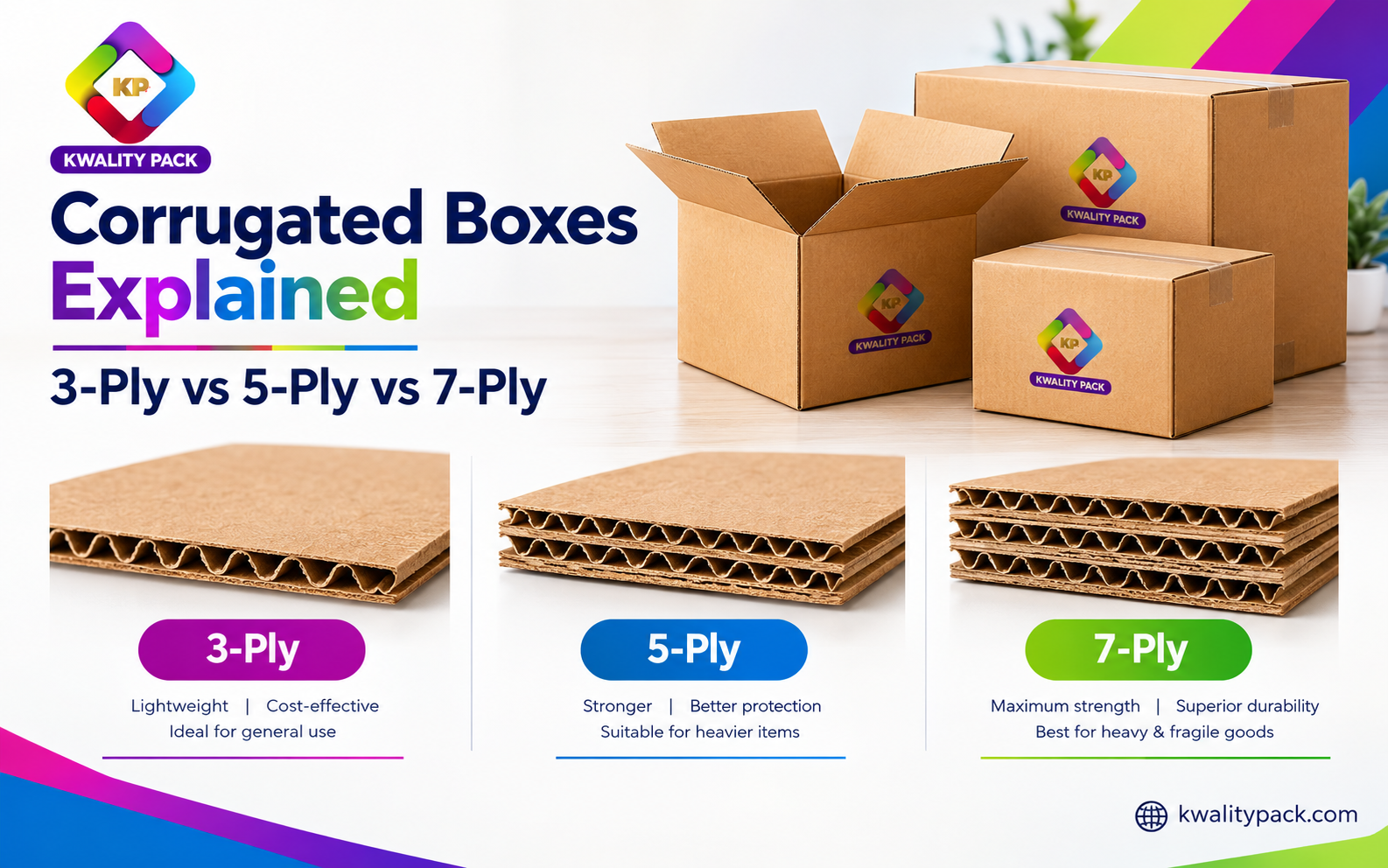
A corrugated box is made from layers of paper. Flat sheets called liners sit on the outside, and a wavy layer called the fluting sits between them. The fluting works like a spring: it absorbs shocks and gives the box its strength.
The ply number is the total number of layers in the board. More layers mean more cushioning and higher stacking strength.
3-Ply Corrugated Boxes
A 3-ply box has two flat liners and one fluted layer, which makes it the lightest and most economical option.
Best for:
• Lightweight products such as clothing, books and stationery
• Garments and soft goods
• Short-distance deliveries
• Retail and gift packaging
Advantages: Low cost, light weight (which keeps courier charges down) and easy to print on.
Limitations: It offers limited protection for heavy or fragile items and is not ideal for long-distance transport or stacking.
5-Ply Corrugated Boxes
A 5-ply box has three liners and two fluted layers. It is the most popular choice for e-commerce and general shipping.
Best for:
• Home appliances and small electronics
• Kitchenware and utensils
• Food and beverage cartons
• Products shipped by courier across cities
Advantages: It balances strength and cost well, handles rough transit better than 3-ply and resists moderate stacking.
Limitations: It costs more than 3-ply and may still not be enough for very heavy or industrial goods.
7-Ply Corrugated Boxes
A 7-ply box has four liners and three fluted layers, which makes it the strongest of the three.
Best for:
• Heavy machinery parts and industrial components
• Large electronics and appliances
• Export shipments
• Goods that will be stacked high in warehouses
Advantages: It gives excellent crush resistance, protects heavy products and survives long-distance handling.
Limitations: It is the most expensive and heaviest option, so it can raise shipping costs if you use it for products that don't need it.
Quick Comparison
Feature 3-Ply 5-Ply 7-Ply
Strength Light Medium to strong Very strong
Cost Lowest Moderate Highest
Best for Light items General shipping Heavy, export
Stacking ability Low Medium High
How to Choose the Right Box
1. Check the weight of your product. As a rough guide, light items under 5 kg suit 3-ply, medium items suit 5-ply, and heavy items suit 7-ply.
2. Consider the journey. A parcel travelling across the country is handled many more times than a local delivery. More handling means a stronger box.
3. Think about fragility. Fragile products need more than a strong box. Pair the right ply with inserts, partitions or cushioning.
4. Factor in stacking. If boxes sit in a warehouse or truck stacked on top of each other, choose higher ply so the bottom boxes don't collapse.
5. Balance cost and protection. Compare the cost of a stronger box against the cost of one damaged shipment. Often the better box pays for itself.
Other Factors That Affect Strength
Ply is not the only thing that matters. Look at these as well:
• Paper quality (GSM and BF): Higher GSM and Bursting Factor ratings mean stronger paper.
• Flute type: Different flute sizes offer different balances of cushioning and stacking strength.
• Moisture: Humidity weakens corrugated board, so coastal or monsoon shipping may need extra care.
• Box design: Well-designed folds and joints add strength without extra material.
Printing and Branding
Corrugated boxes are also a branding opportunity. Printing your logo, product details or handling instructions turns a plain shipping carton into a marketing tool, and 3-ply and 5-ply boards both take clean prints well.
Final Thoughts
There is no single "best" corrugated box, only the best box for your product, route and budget. Start with 3-ply for light goods, choose 5-ply as your reliable all-rounder, and use 7-ply when strength cannot be compromised.