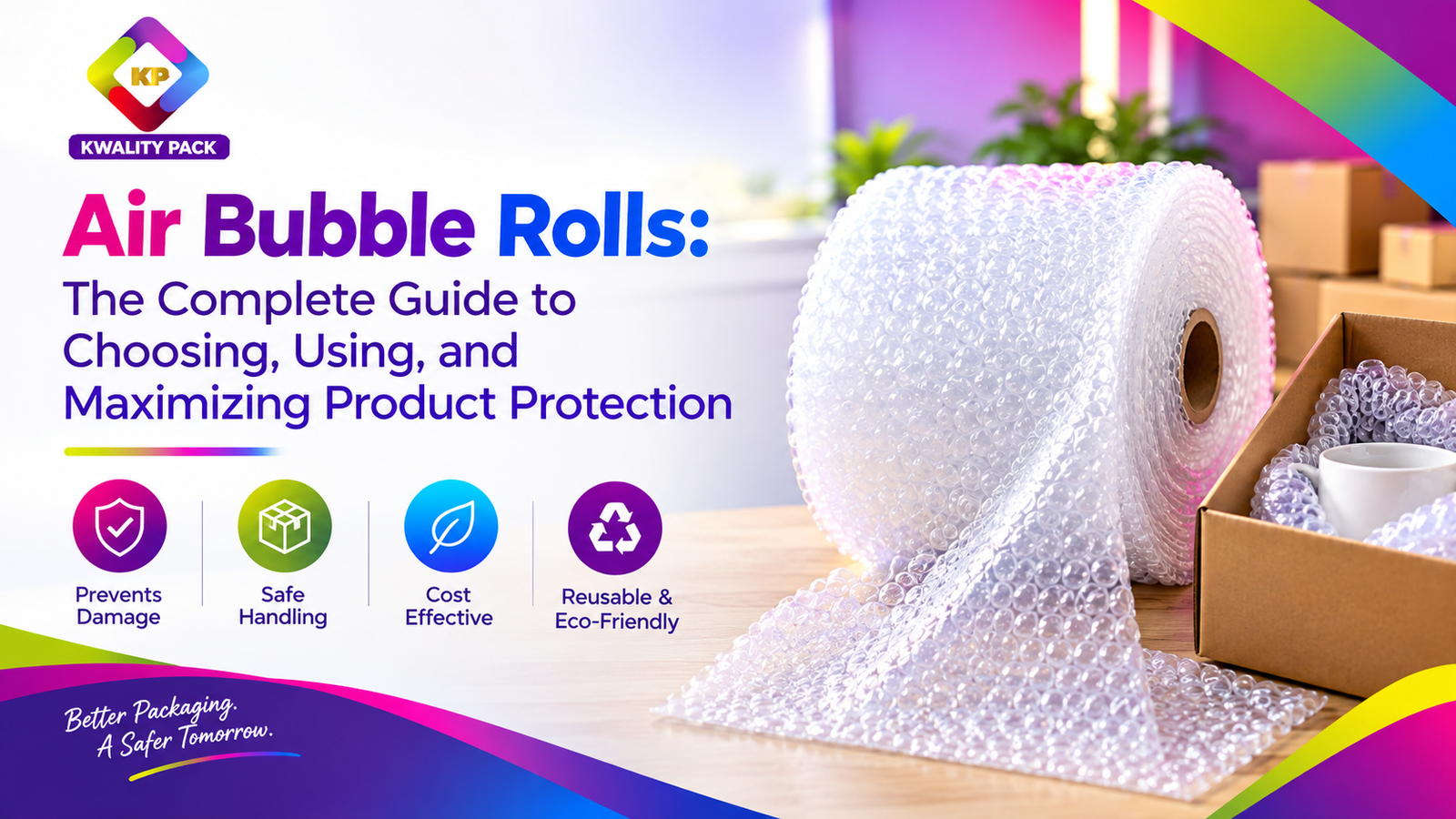
When people think about packaging that "wows" a customer, they usually picture branded boxes, tissue paper, or custom mailers. Air bubble rolls rarely get that spotlight — but ask any warehouse manager, ecommerce seller, or logistics team, and they'll tell you: nothing beats a good bubble roll when it comes to keeping products intact between the shelf and the doorstep.
Here's an in-depth look at why this simple, unglamorous material remains one of the most essential tools in packaging today — and how to get the most out of it.
What Exactly Are Air Bubble Rolls?
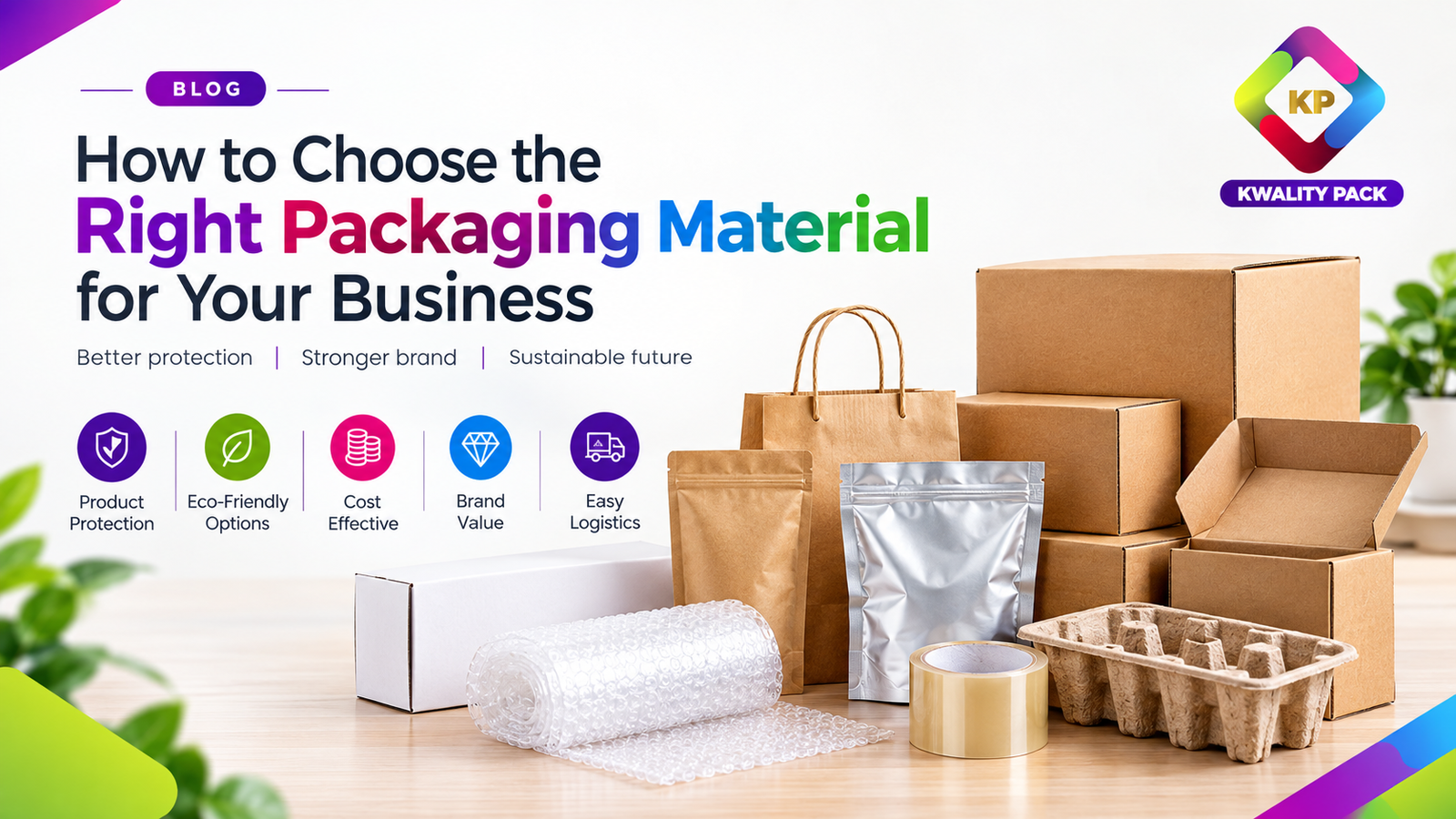
Air bubble rolls are continuous sheets of plastic film embedded with evenly spaced air-filled pockets. Sold in large rolls, they're cut to size and wrapped around products, or used to line the inside of boxes, to absorb shock, prevent scratches, and cushion against impact during handling and transit.
They're typically made from low-density polyethylene (LDPE), a lightweight, flexible plastic chosen for its durability and puncture resistance. The film is heat-sealed to trap air inside individual pockets, which is what gives bubble rolls their characteristic cushioning power.
They come in a range of specifications — bubble size (small, medium, large), film thickness, and roll width — so the right choice depends heavily on what's being shipped.
A Brief History: How Bubble Wrap Became a Packaging Staple
Interestingly, bubble wrap wasn't originally invented as packaging material at all. In 1957, engineers Alfred Fielding and Marc Chavannes were trying to create a textured wallpaper by sealing two shower curtains together, trapping air bubbles between them. When that idea didn't take off, they pivoted — first marketing it as greenhouse insulation, and eventually as protective packaging after IBM used it to ship a new computer in 1959. Since then, it's become one of the most widely used protective packaging materials in the world, evolving from a novelty product into an industrial-scale essential.
How Air Bubble Rolls Actually Protect Products
Understanding the mechanics helps explain why bubble rolls are so effective:
• Shock absorption — The trapped air in each pocket compresses on impact, slowing down the force before it transfers to the product inside.
• Even pressure distribution — Because bubbles are spaced uniformly across the roll, pressure from drops, bumps, or stacking is spread out rather than concentrated on one point.
• Surface cushioning — The film layer itself also prevents direct contact between hard surfaces, reducing scratches and scuffing during transit.
• Vibration dampening — During long-haul shipping, constant vibration from trucks, planes, or conveyor systems can loosen components or cause micro-damage over time. Bubble wrap absorbs much of this vibration before it reaches the product.
1. Impact Protection That Actually Works
The air-filled pockets act as tiny shock absorbers. When a package is dropped, jostled, or stacked under weight, the trapped air compresses and disperses the force before it reaches the product. This makes bubble rolls especially valuable for fragile items — glassware, electronics, ceramics, and cosmetics — where even a small impact can mean a cracked or unsellable product.
2. Lightweight, Which Means Lower Shipping Costs
Unlike foam inserts or heavier cushioning materials, bubble rolls add minimal weight to a shipment. Since many carriers calculate charges based on dimensional weight, using a lightweight protective material can meaningfully reduce per-package shipping costs — especially at scale. For businesses shipping thousands of units a month, this weight savings compounds into real, measurable cost reduction over a year.
3. Versatile Across Industries
Bubble rolls aren't just for ecommerce warehouses. They're widely used in:
• Moving and relocation services — wrapping furniture, mirrors, and appliances
• Electronics and appliance manufacturers — protecting screens and delicate components
• Wholesale and B2B shipping — cushioning bulk pallets and crates
• Retail and D2C brands — protecting products inside branded mailer boxes
• Art and antique dealers — wrapping framed pieces, sculptures, and collectibles for transit
• Medical and lab supply shipping — cushioning glass vials, instruments, and diagnostic equipment
• Automotive parts distributors — protecting machined or coated components from surface damage
This flexibility makes bubble rolls a staple SKU for any packaging supplier serving multiple industries, and often one of the highest-turnover products in a warehouse's supply inventory.
4. Available in Anti-Static and Eco-Friendly Variants
For electronics specifically, anti-static (pink or metallic-tinted) bubble rolls prevent static discharge from damaging sensitive components like circuit boards, hard drives, and processors — a small but critical detail for tech sellers and manufacturers.
On the sustainability side, recyclable and biodegradable bubble roll options are gaining traction as businesses look to cut down on plastic waste without compromising protection. Some newer variants use recycled LDPE content or fully compostable films, allowing brands to maintain protective performance while meeting sustainability commitments.
5. Easy to Store, Easy to Use
Because they come on rolls rather than pre-cut sheets, bubble rolls are space-efficient to store and can be cut to the exact length needed for each shipment — reducing material waste compared to fixed-size cushioning products. Rolls can be mounted on dispensers with built-in cutting edges, speeding up packing lines significantly compared to unrolling and manually tearing sheets.
Bubble Rolls vs. Other Protective Packaging Materials
It's worth understanding how bubble rolls stack up against alternatives:
Material Best For Trade-offs
Air bubble rolls Fragile, irregular-shaped items; general cushioning Not fully biodegradable unless specified
Foam inserts High-value, uniformly shaped products Heavier, less flexible, higher cost
Packing peanuts Filling void space in large boxes Messy, less structured protection
Kraft paper padding Eco-conscious brands, lightweight items Less shock absorption than bubble wrap
Air pillows Void fill in ecommerce boxes Good for filling gaps, less surface cushioning
Many businesses actually use a combination — bubble rolls for direct product wrapping, paired with void-fill materials to stabilize the item inside the box.
Choosing the Right Bubble Roll for Your Business
A few quick pointers when selecting one:
• Small bubbles (3/16") — better for tightly wrapping irregular shapes and providing surface-level scratch protection on smaller items like jewelry or small electronics
• Large bubbles (1/2" or more) — better shock absorption for heavier or bulkier items like appliances, furniture, or industrial parts
• Film thickness — thicker film holds air longer and withstands more pressure, ideal for high-value or fragile goods that may be handled multiple times before reaching the end customer
• Roll width — should match the size of the products or boxes you're packing most frequently, to minimize cutting and waste
• Perforated vs. non-perforated rolls — perforated rolls allow quick tear-off at set intervals, which speeds up high-volume packing operations
Common Mistakes Businesses Make When Using Bubble Wrap
Even with the right material, poor application can undermine protection:
• Under-wrapping fragile items — a single thin layer often isn't enough for glass, ceramics, or electronics; double-wrapping is usually safer
• Wrapping bubble-side in instead of out — for extra-fragile items, placing the bubbles against the product (rather than the outer film) provides more direct cushioning
• Ignoring box fit — even well-wrapped products can shift and get damaged if the surrounding box is too large; combine bubble wrap with proper box sizing
• Reusing worn-out rolls