
Every shipment tells a story — and too often, that story
ends with a damaged product, an unhappy customer, and a costly return. In
India's fast-growing manufacturing and e-commerce landscape, the right
packaging material isn't a luxury; it's a safeguard for your brand's
reputation. At Kwality Pack, we've spent over a decade helping businesses
answer one deceptively simple question: which packaging material actually
fits my product?
Here's a practical guide to help you decide.
1. Start With What You're Protecting
Before comparing materials, ask what kind of damage your
product is most vulnerable to:
- Impact
and shock — electronics, glassware, ceramics, and machine parts need
strong cushioning. - Moisture
and humidity — food-grade items, pharmaceuticals, and metal components
need barrier protection. - Abrasion
during transit — furniture, painted surfaces, and finished metal goods
need surface-level padding. - Load
stability on pallets — bulk industrial goods need materials that hold
everything firmly in place.
Once you know the risk, the material choice becomes much
clearer.
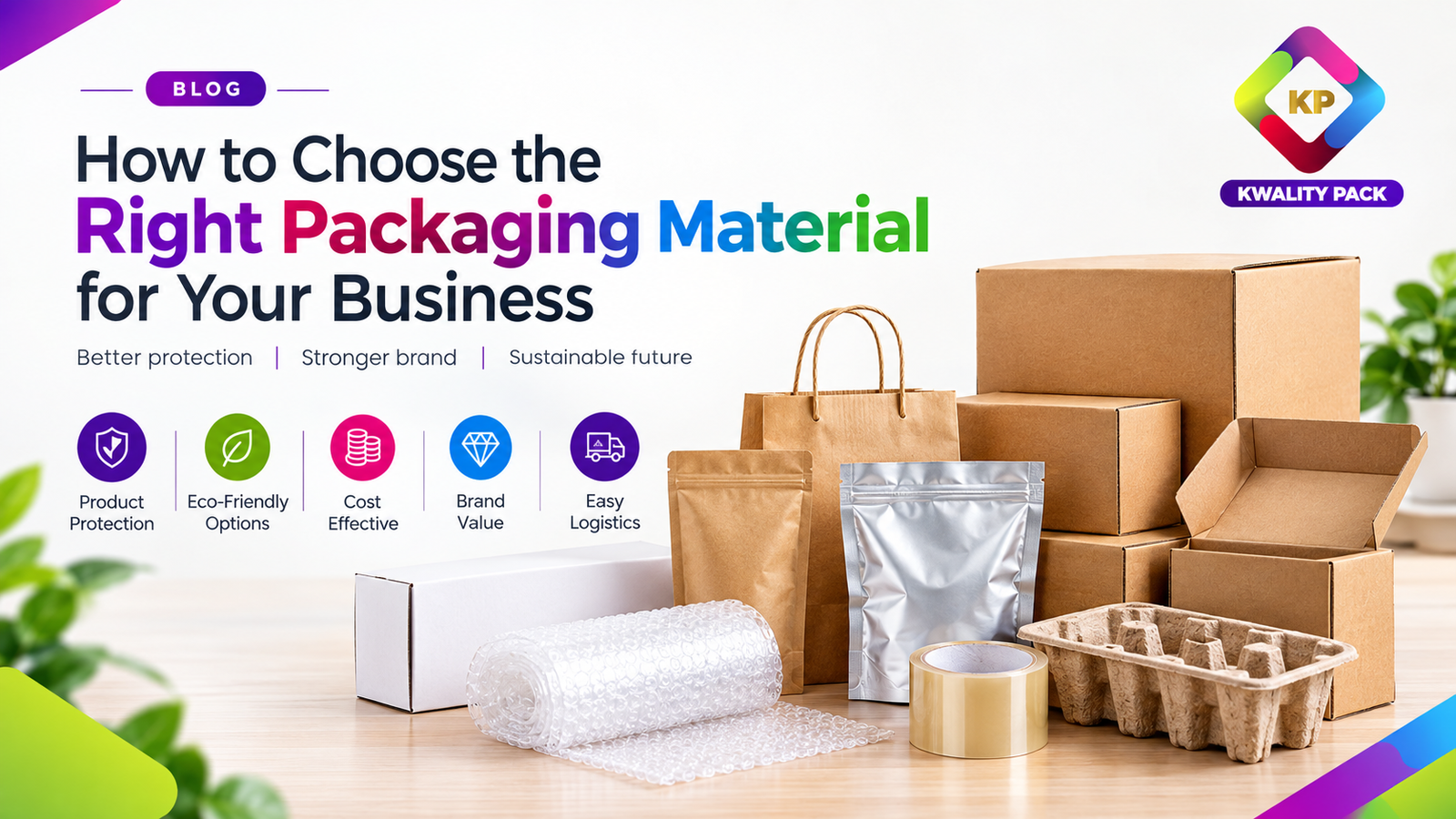
2. Matching Materials to Common Packaging Needs
For delicate, high-value items (electronics, glass,
medical equipment): EPE (Expanded Polyethylene) foam is ideal. It offers
excellent shock absorption and moisture resistance while remaining lightweight,
making it a favorite for products that can't afford even minor transit damage.
For general cushioning at scale: Air bubble rolls are
the industry workhorse — flexible, cost-effective, and available in multiple
bubble diameters depending on how much cushioning your product needs. For
smaller or irregularly shaped items, ready-to-use air bubble pouches save time
on the packing line while still offering strong impact protection.
For wrapping and storage in industrial settings: LDPE
(Low-Density Polyethylene) rolls provide tear-resistant, moisture-proof
protection — a practical choice for bulk storage, machinery wrapping, and
outdoor-exposed goods.
For pallet and load security: Stretch film is
essential for logistics and export packaging. High-cling variants keep loads
stable during transport, reducing shifting damage and improving warehouse
efficiency.
For sealing and finishing: BOPP self-adhesive tapes
bring it all together with strong tensile strength and reliable adhesion,
ensuring cartons stay sealed from the loading dock to the customer's doorstep.
3. Don't Overlook Cost-Per-Protection
The cheapest material isn't always the most economical
choice. A slightly higher upfront packaging cost can save significantly more in
returns, replacements, and reputational damage. The smarter metric to track is cost
per protected unit, not just cost per roll or per kilogram.
4. Test Before You Scale
If you're switching materials or packaging a new product
line, run a small trial batch first. Ship a sample set, monitor for damage on
arrival, and adjust foam thickness, film gauge, or tape strength accordingly
before committing to bulk orders.
Let Our Team Help You Decide
With over 1,400 clients served and 750+ work facilities
supported, Kwality Pack has seen nearly every packaging challenge — and solved
most of them. Whether you need a single product recommendation or a complete
packaging strategy across your supply chain, our team is ready to help.